





Why Feeling Heard Matters in Healthcare
July 31, 2026

A healthcare visit is more than just assessing your symptoms, diagnosing your condition, and treating what seems to be medically wrong. A healthcare visit should give patients the space and opportunity to comfortably share their concerns, ask questions, and receive clear and understandable answers.
Patients want to feel like their care providers are listening and genuinely considering what they have to say. This sense of being heard and listened to can shape how a patient feels about their healthcare appointment after they leave that office door.
Let’s take a deeper look at why feeling heard matters in healthcare, and what this actually looks like in practice.
The Breathe Free Outcomes & Experience Report Speaks: Patients Want to Be Heard
Here’s one thing for sure: patients want to be heard.
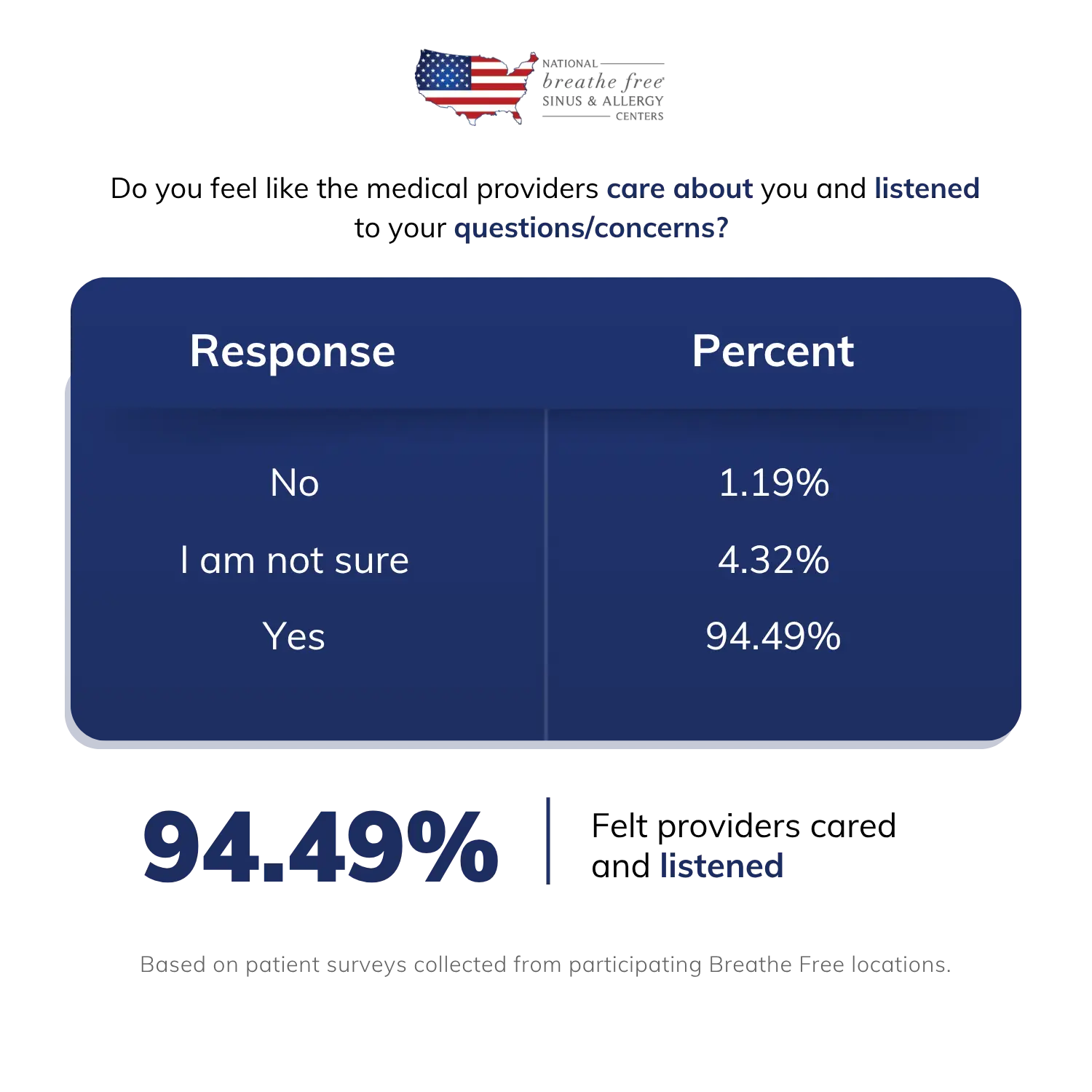
According to the Breathe Free Outcomes & Experience Report, 94.49% of participating patients felt that their Breathe Free providers listened to and cared about what they had to say.
When patients feel heard and understood, it creates an environment of open communication, which improves patient engagement and satisfaction with their care. Effective, clear, and honest communication not only supports education and information but also empowers patients to be active participants in their health.
The Importance of Feeling Heard in Healthcare
Feeling that sense of being heard and understood can shape a patient’s overall experience and care journey. It not only provides clear and accurate information but also creates a sense of trust and confidence.
✅It fosters trust and confidence
Feeling heard creates a sense of patient trust and confidence. When there is patient trust, patients feel more comfortable openly discussing their health concerns. When patients trust their healthcare providers and believe they are receiving reliable, evidence-based care options, they are more likely to adhere to treatment plans, which, in turn, can contribute to better patient outcomes.
✅It creates strong provider-patient relationships
A meaningful and strong provider-patient relationship is one that is rooted in open communication, trust, and respect. When a physician demonstrates active listening and positive communication skills, patients are more likely to discuss critical symptoms, follow treatment guidance, and maintain long-term relationships.
Moreover, long-term professional relationships between providers and patients allow for continuity of care and a sense of familiarity that can make each visit feel more comfortable than the last.
✅It encourages active participation
When healthcare providers cultivate an environment that prioritizes open communication and active listening, they create a space that encourages patients to be part of the conversation and become active participants in their health. They ask questions, clarify information, carefully review their care options, and make informed decisions according to their individual concerns and needs.
✅It leads to better care and outcomes
Healthcare is not one-size-fits-all. One treatment plan may work for one patient, but there’s no guarantee of the same results for another. Each patient who walks through the doctor's office has their own concerns, experiences, and unique circumstances that they bring to the table.
Feeling dismissed or ignored can create real medical risks because it creates an environment where patients are less likely to share critical symptoms, adhere to treatment plans, and maintain long-term relationships with their care provider.
When care providers actively listen and patients feel heard, it improves provider-patient communication and allows patients to be more open in discussing their symptoms and individual experiences, which can support a more accurate diagnosis. An accurate diagnosis helps providers develop appropriate treatment plans, therefore leading to better care and outcomes.
Active Listening in Healthcare: What It Actually Looks Like
Unfortunately, many patients going through the healthcare system often feel rushed or ignored during consultation. Many times, they leave the doctor’s office with still so many unanswered questions or lingering concerns that have not been properly addressed.
Here’s what active listening and feeling heard look like in healthcare:
✅Open communication
Open communication in medical practice provides the space and opportunity for patients to discuss their health concerns and symptoms comfortably, ask questions about their conditions and treatment options, and receive clear answers and explanations for their questions and concerns.
When patients have a clearer understanding of their condition and care options, they feel more confident in the care they receive, as well as more confident in making informed decisions and navigating their health journey.
✅Trust
Active listening in healthcare fosters strong and positive physician-provider relationships, which in turn cultivates trust.
When patients feel that they can trust their care providers, they are more likely to openly and comfortably discuss their concerns, including critical symptoms. When there is trust, patients are more likely to follow treatment and management plans.
✅Feeling understood and cared for
When patients are already dealing with frustrating, sometimes scary, health concerns, feeling rushed or ignored can create an environment that leads to even more frustration.
Patients don’t want to be seen as mere symptoms, statistics, or items that need to be checked off a list. They want to be seen as people–feeling understood and cared for. Feeling seen, respected, understood, and cared for helps build human connection, and at the end of the day, healthcare is human.
✅Shared decision-making
Today’s patients have an increasing desire to actively take part in their health, and not just passive participants. They want to be part of the conversation. They thoroughly discuss their symptoms, ask questions, and evaluate their care options. This gives them the agency to make decisions that align with their individual health concerns, needs, goals, and lifestyles.
Conclusion: What This Means for Your Practice
Healthcare is a human industry. As healthcare professionals, you’re doing more than just diagnosing and treating conditions. You’re facing patients who are already dealing with frustrating symptoms that they don’t understand.
Active listening is more than just bedside manner. It’s about meeting patients with respect, making them feel heard, seen, understood, and cared for as people.
Evidence-based ENT care—delivered locally, supported nationally.
A clinically-directed care model that protects clinical autonomy and expands access for patients.