





What Patients Value Most When Choosing an ENT or Allergy Provider
July 31, 2026
When someone says they’re looking for a sinus specialist, the first thing that comes to mind is symptom relief. While this may be a priority in looking for sinus care, it’s not the only thing that matters for many patients.
Just because a patient is in search of urgent sinus symptom relief doesn’t mean they wouldn’t take the time to consider their care options to make sure they’re choosing a provider that aligns with their individual healthcare concerns, needs, and preferences.
Let’s dive deeper into what patients value most in sinus care.
What the Sinus & Allergy Patient Surveys Say: Relief, Communication, and Trust
According to the Breathe Free Outcomes & Experience Report, which draws on patient surveys collected from participating Breathe Free locations, three themes consistently emerged: relief, communication, and trust.
✅86.22% of surveyed patients reported improved symptoms following treatment
✅94.49% of participating patients across Breathe Free locations felt their providers listened to their concerns and cared about what they had to say
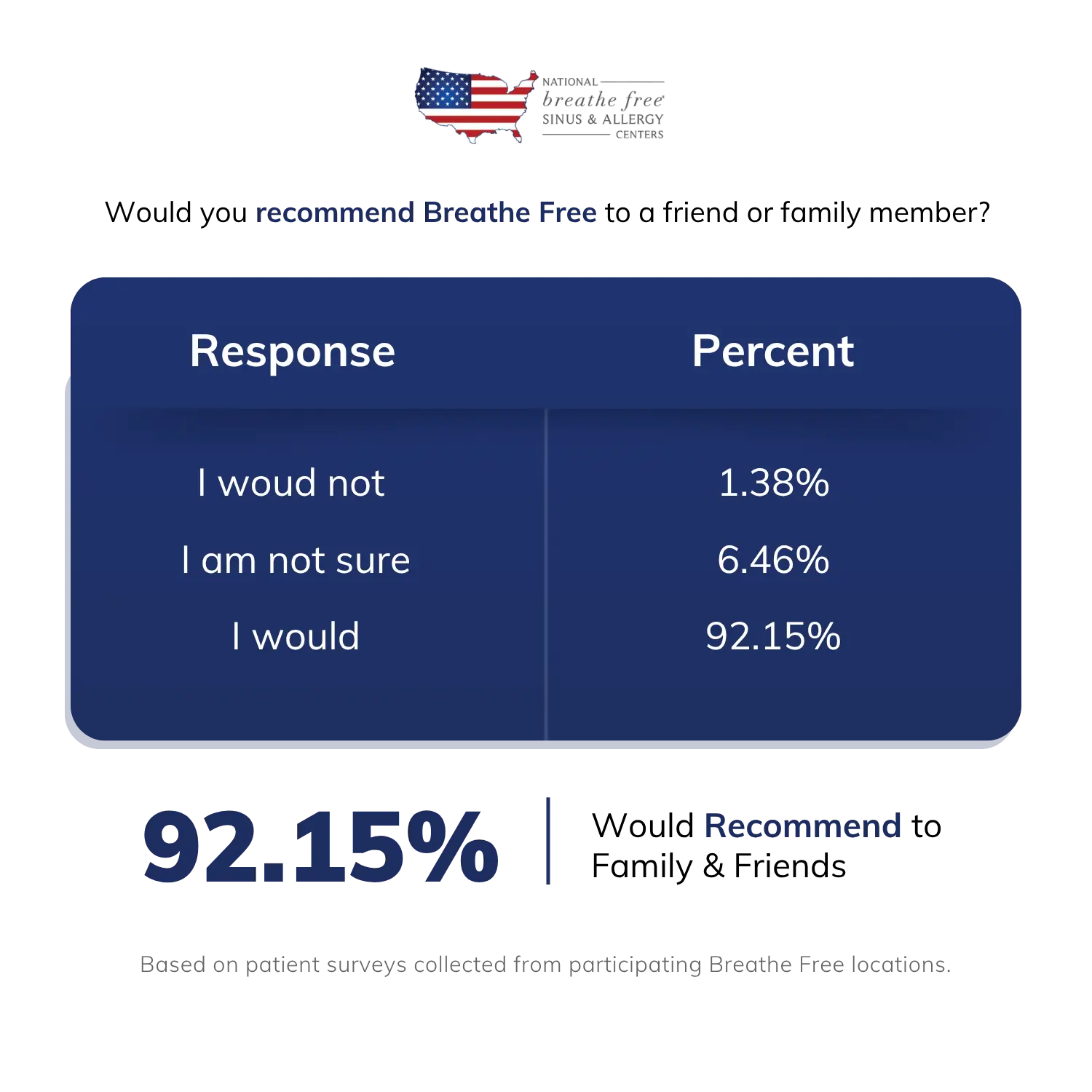
✅92.15% of participating patients across Breathe Free locations reported that they would recommend Breathe Free to family and friends
These findings help healthcare providers and industry stakeholders understand the patient perspective, which can help inform business decisions and strategies.
What Matters Most to Patients in Sinus Care
The survey results from this year reveal three consistent themes across participating Breathe Free locations: patients value relief, communication, and trust in sinus care.
✅Patients want relief
From the survey responses collected and analyzed across participating Breathe Free locations, patients highlighted the importance of symptom improvement and relief.
Several sinus and allergy conditions, especially when untreated or poorly managed, can significantly impact the patient’s quality of life. When patients say they want relief, it goes beyond physical relief. It also means improving quality of life.
For sinus and allergy patients, symptom improvement and relief means:
- Improved breathing
Sinus and allergy conditions can impair breathing by causing restricted airflow, nasal congestion, and sinus pressure. When patients say they want their symptoms to improve, it means they want to regain the ability to breathe more comfortably and efficiently, which can make daily activities easier.
- Better sleep quality
Persistent sinus and allergy issues can disrupt proper sleep and rest. Patients who suffer from chronic issues are typically looking for symptom improvement because they want to sleep better. Adequate sleep and rest every night can support day-to-day energy, function, and productivity.
- Returning to activities that matter to them most
Sinus and allergy conditions not only disrupt breathing and sleep, but also interfere with daily activities. When patients achieve symptom relief, they may be able to return to the activities that matter most to them: spending time with family and friends, engaging in their hobbies, moving their bodies, and being productive in work or school, without having to constantly worry about their symptoms.
- Improved overall quality of life
When patients breathe better, sleep without disruptions, and return to daily activities that matter to them the most, they improve the overall quality of their lives. For many patients, the impact of sinus symptoms extends beyond physical discomfort. It helps support quality living, daily routines, social interactions, daily productivity, and overall emotional and mental well-being.

✅Patients want to be heard
From the same survey, patients reported the value of being heard and seen in their healthcare journey. This reiterates the importance of strong provider-patient relationships, which can be linked to positive patient outcomes and overall experiences.
Here’s what active listening looks like in medical practices:
- Open communication
A medical practice that practices open communication gives patients the space to comfortably discuss their concerns in detail, ask questions when things need clarification, and receive clear answers to their concerns. When they have a better understanding of their conditions and care plans, they become more confident in making informed decisions.
- Trust
Trust fosters strong and long-term provider-patient relationships. When patients trust their care providers, they are more likely to adhere to treatment plans, which can contribute to better patient outcomes.
- Feeling understood and cared for
Patients are often already dealing with frustrating—and sometimes frightening—symptoms and health concerns. Feeling ignored or rushed during medical consultations does not cultivate a comfortable environment rooted in trust. Instead, patients are less likely to share critical symptoms, which may make it more difficult for providers to reach an accurate diagnosis.
- Shared decision-making
When patients feel heard, they feel like they are part of the conversation, and no longer just passive participants in their health. They ask questions, evaluate their care options, and make decisions that align with their individual concerns, needs, goals, and lifestyles.
✅Patients want providers they can trust
Patients have emphasized the crucial role of trust in their overall care journey. When patients trust their healthcare provider, patients are more likely to become advocates for the practice.
Trust is crucial in the patient’s confidence in the care they receive and their willingness to advocate for their provider.
- Patient trust
Patients can become powerful ambassadors for healthcare organizations when their relationship is rooted in trust. They are more likely to recommend a practice if they experience a relationship rooted in trust, mutual respect, and care.
- Confidence in the care they receive
Patients are more likely to trust providers they view as knowledgeable, reliable, and committed to patient-centered care. If they trust their provider and trust in the care they receive, they are more likely to follow care plans and remain engaged throughout their patient journey.
- Word-of-mouth referrals
Word-of-mouth referrals are one of the most powerful endorsements a patient can make for a healthcare provider. When a patient recommends a provider to family and friends, it means they have a high level of confidence in their quality of care and support, enough to recommend that provider to others they care about.
- Long-term provider-patient relationships
Patient trust fosters long-term provider-patient relationships. Not only does it benefit patients due to the continuity of quality care, but it also encourages them to continue seeking care from the practice.

Conclusion: Your Practice and What Patients Value Most
Today's patients are informed and actively involved in their healthcare decisions. While patient experiences vary from person to person and they describe a wide range of experiences across their care journey, three common themes consistently emerged from patient survey responses collected and collected from participating Breathe Free locations and analyzed through the Medfluence Operating System. And it’s that patients value relief, communication, and trust the most.
Evidence-based ENT care—delivered locally, supported nationally.
A clinically-directed care model that protects clinical autonomy and expands access for patients.