





What Makes Patients Recommend Their Healthcare Provider?
July 31, 2026

Trust is fundamental in creating strong and long-term provider-patient relationships. It helps shape various aspects of the care journey, including the disclosure of relevant health information, treatment adherence, patient outcomes, and satisfaction.
Trust helps create a healthcare environment that fosters open communication, confidence in care, and collaboration.
When a patient recommends a medical practice or healthcare provider, it feels like a win. That’s because it is. When patients trust their provider and have a good professional relationship with them, they can become powerful advocates for the provider or organization.
Let’s take a look at why patients recommend their providers and why exactly this is important.
What Do the Survey Results Say?
The undeniable truth is this: patients want a provider that they can trust.
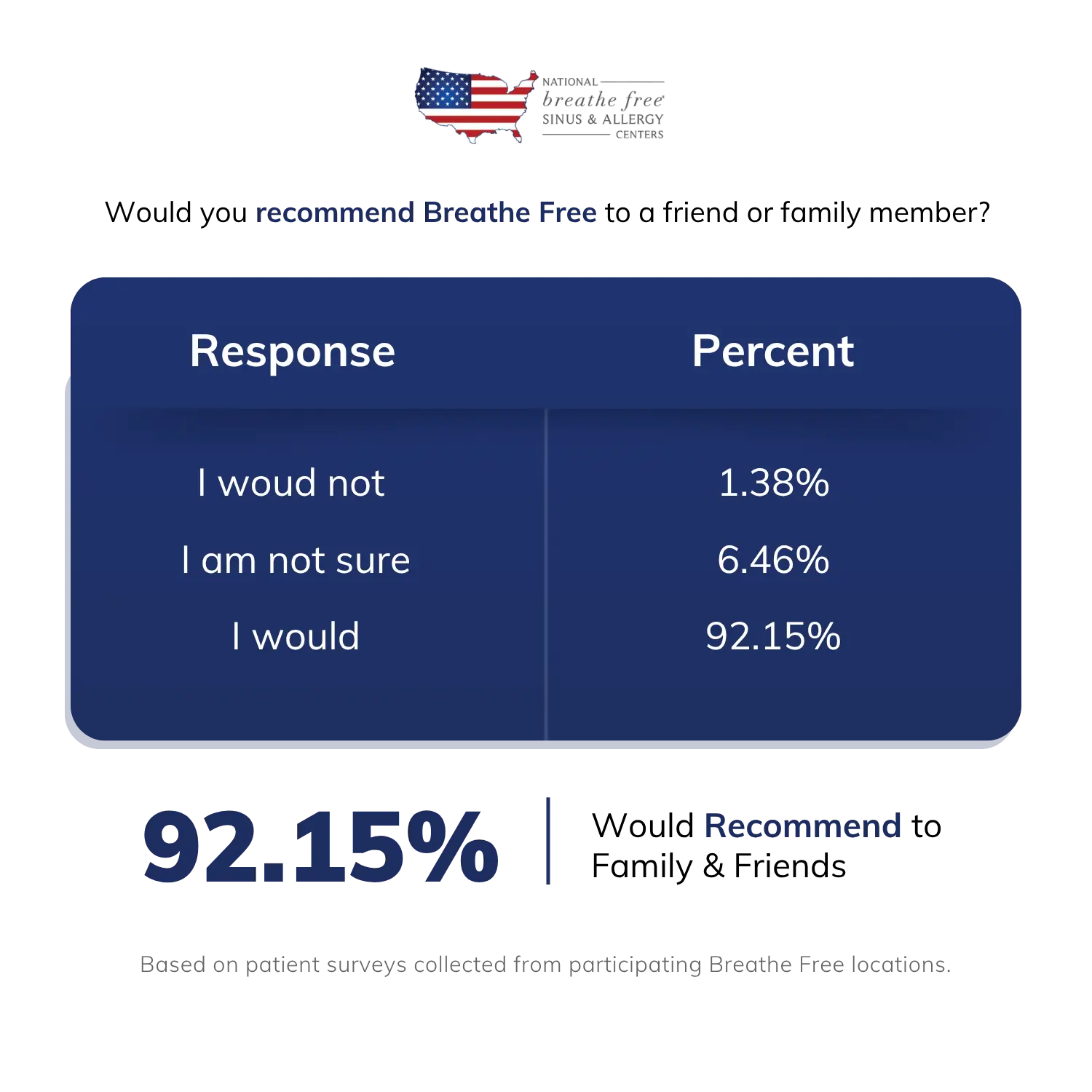
According to the Breathe Free Outcomes & Experience Report, 92.15% of participating patients across participating Breathe Free locations reported that they would recommend Breathe Free to family and friends.
This number tells us that the importance of trust goes beyond the patient’s relationship with their provider, but could also play a crucial role in creating advocates for healthcare providers and organizations.
Why Trust Creates Advocacy in Healthcare
Trust plays an important role in the foundation of strong and positive provider-patient relationships. Here’s how trust creates advocacy in healthcare:
✅Patient trust
Patients are more likely to recommend a practice or provider to family and friends if there is patient trust. Patients who trust their providers are more likely to become advocates for the practice.
When a practice cultivates an environment where there is mutual respect and trust, they help foster positive perceptions of the care experience.
When patients have a positive experience with a practice, they are encouraged to share these experiences with others and naturally become advocates for these organizations.
✅Confidence in the quality of care they receive
When a practice cultivates trust, patients feel confident and secure in the quality of care they receive. Providers who demonstrate clinical expertise, communicate clearly, and recommend patient-centered care options help build patient confidence and trust.
When patients feel confident and trust their provider, they are more likely to remain engaged throughout their care journey, which, in turn, can impact patient outcomes.
Professional provider-patient relationships that are rooted in trust and confidence in the quality of care received become stable and long-term, which benefits both patients and providers.
✅The importance of word-of-mouth referrals
For the longest time, word-of-mouth referrals have been among the most significant endorsements healthcare providers and organizations can earn. And that truth remains today.
Patients who recommend their provider to family and friends reflect a high level of confidence in the quality of care and support that they receive and experience firsthand, which is why they recommend that provider to family and friends.
✅Building positive and long-term provider-patient relationships
Positive, strong, and long-term professional relationships between providers and patients are rooted in trust and confidence.
Patient trust cultivates continuous engagement in their care journey. When patients trust a medical practice, they will choose to continue their care journey with them. Continued patient trust encourages patients to return to the healthcare organization for future care, which also supports long-term practice growth.
The Importance of Trust and Referrals in Healthcare
More than creating ambassadors for medical practices, patient trust and referrals play crucial roles in healthcare practices:
✅Improve patient outcomes and satisfaction
Trust is fundamental to better adherence to treatment and care plans. When patients trust their providers and follow through with the prescribed treatment, can contribute to better patient outcomes.
When patients trust their provider and adhere to recommended treatment plans, they are more likely to have a positive patient experience and overall satisfaction with the care they received.
✅Grow a strong patient base
Referrals help practices grow a strong patient base. Satisfied patients are likely to remain loyal. And when they recommend a practice to family and friends, it translates to new patients. This can support sustainable practice growth while reducing reliance on additional marketing efforts. Moreover, a wider reach through patient referrals can strengthen a practice’s authority in its local community.
✅Build trust and openness as a foundation
When patients recommend a practice or provider to family and friends, this recommendation already builds trust and openness as the foundation for the new provider-patient relationship.
There is pre-established trust and confidence when a provider comes highly recommended. This will encourage new patients to be open and comfortable during medical consultations, which may support more accurate diagnosis and individualized treatment planning.
✅Drive patient loyalty
Patient trust, referrals, and advocacy create a cycle that ultimately cultivates patient loyalty. A loyal patient base who keeps coming back for continuity of care is crucial in the long-term success of a medical practice.
Conclusion: The Importance of Making Ambassadors Out of Your Patients
Trust is crucial in healthcare and affects several aspects of the patient care journey. When a patient trusts a medical practice and has confidence in the quality of care and support they provide, they are more inclined to recommend the practice to family and friends, becoming advocates for the practice.
Evidence-based ENT care—delivered locally, supported nationally.
A clinically-directed care model that protects clinical autonomy and expands access for patients.