





The Most Important Outcome Isn't a Procedure—It's Getting Your Life Back
August 7, 2026
When someone says they are looking for symptom relief, it's natural to think first about physical improvement. While this is technically true, physical relief is only part of the story.
Various sinus and allergy conditions, especially if left untreated, can significantly impact day-to-day life, activities, productivity, sleep, comfort, and overall well-being. Common issues such as nasal congestion, breathing difficulties, postnasal drip, headaches, and sinus pressure can be frustrating.
When patients seek medical help, it’s because they want treatment options that help improve their symptoms. But many forget that when patients say they want relief, it’s more than just improving physical symptoms—it's about reclaiming their quality of life.
Let’s look deeper into what relief actually means for patients.
According to the 2026 Sinus & Allergy Patient Report, Patients Want Relief
Here’s the truth: patients want relief.
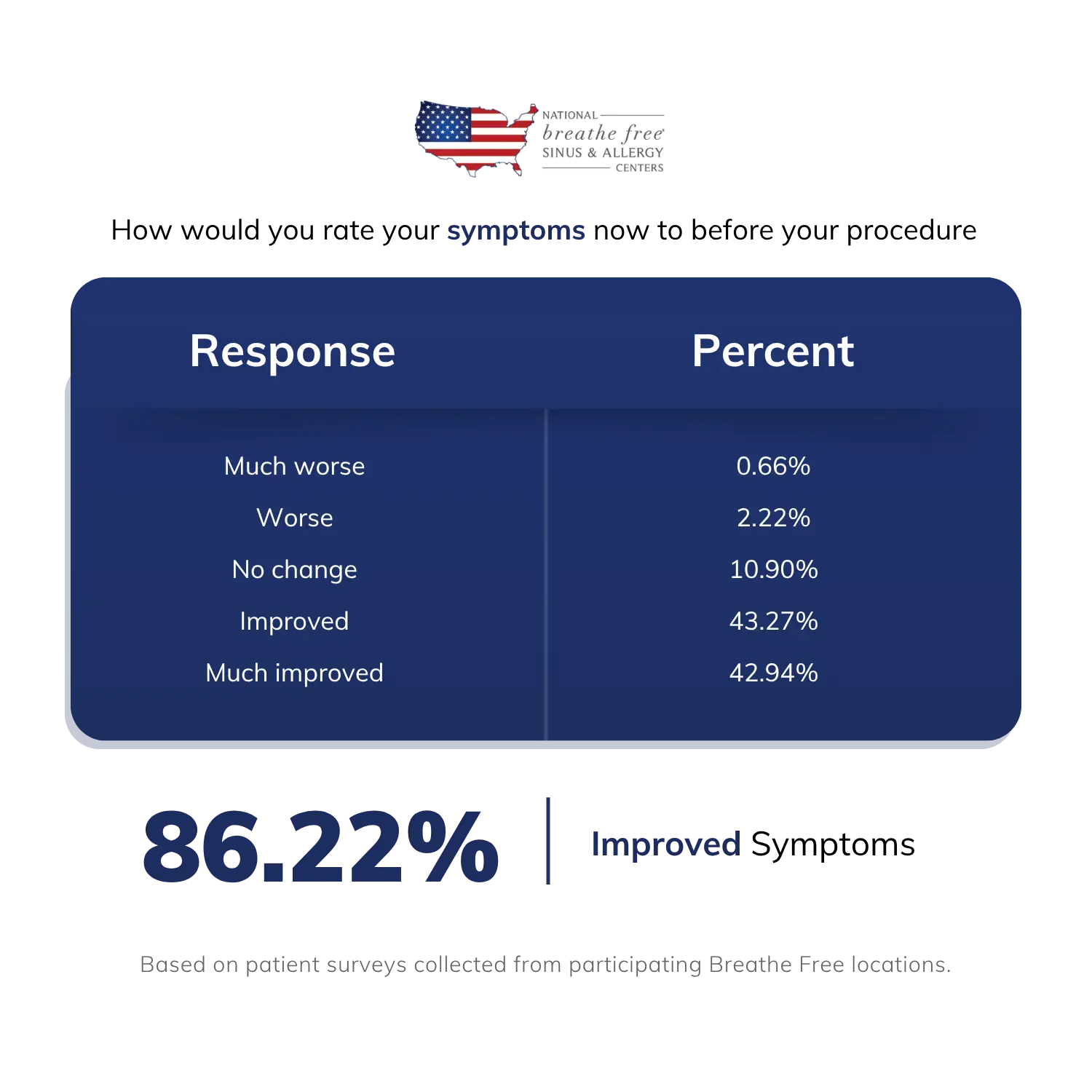
According to the Breathe Free Outcomes & Experience Report, 86.22% of patients across participating Breathe Free locations reported improved symptoms following treatment. The collected and analyzed data from the survey highlighted the importance of symptom relief and improvement for many patients.
However, many healthcare providers and patients alike often forget that “relief” refers to more than just improvement from physical symptoms, but also significantly impacts other areas of life.
What Does ‘Relief’ Actually Mean for Patients?
Patients who suffer from persistent or chronic sinus and allergy issues have become too familiar with how they can affect their daily life, productivity, sleep, and comfort. When patients say they want relief, it goes beyond the typical physical improvements.
Here’s what patients actually mean when they say they want “relief”:
✅Improved breathing
Sinus and allergy conditions can cause frustrating symptoms such as nasal congestion, breathing difficulties, and sinus pressure due to restricted nasal airflow.
When patients say they want “relief”, they mean they want to breathe easier and more comfortably, especially after suffering breathing difficulties for so long. When patients regain the ability to breathe more comfortably, everyday life and normal activities become easier to navigate, giving them back a sense of normalcy.
✅Better sleep quality
Persistent sinus issues can disrupt healthy sleep patterns.
Breathing difficulties, nasal congestion, and postnasal drip can disrupt a good night’s rest, making it difficult to get restful sleep. As a result, patients may wake up with less energy, sleepy, irritable, and unable to concentrate on work or school.
Patients who are looking for symptom relief and improvement will often link it with better sleep quality. For many people, relief could mean better, more restful sleep every night.
This helps support energy, focus, productivity, and mood during the day.
✅The ability to return to their normal activities
More than disrupted breathing and sleep, persistent sinus and allergy issues can prevent many patients from enjoying their normal activities. When they are constantly dealing with nasal congestion, breathing difficulties, uncontrollable sneezing, headaches, postnasal drip, and sinus pressure, it makes it harder for them to move through the day.
Symptom relief and improvement, for many patients, means not having to constantly worry about these symptoms, allowing them to easily and comfortably return to the activities that they enjoy and matter to them the most: spending time with family and friends, participating in their hobbies, being physically active, and being productive.
✅Improved overall quality of life
Lastly, beyond the obvious relief from physical symptoms and limitations, symptom relief and improvement mean the improvement of one’s overall quality of life.
When patients have fewer symptoms to worry about and less discomfort throughout the day, the quality of their daily life may improve. They can go about their daily routines, interact with others, and be productive at school or the workplace.
This supports overall emotional and mental well-being.
The Human Side of Healthcare
Healthcare is more than just assessing symptoms, diagnosing illnesses, prescribing medications, and performing procedures. At the front and center is human connection. More than symptom relief, patients seek something more human than technical: understanding and support.
- Patients want care providers who actively listen and genuinely care. They want their concerns to be taken seriously, promptly addressed, and taken care of.
- Patients who are looking for relief want a care journey and experience rooted in empathy and compassion. They want care providers who see them as people with varying needs, instead of an item they’re supposed to check off a to-do list.
- Patients want to be active participants in their health. They want clear and understandable information that educates them and allows them to make informed healthcare decisions.
When patients feel heard, cared for, and their concerns taken seriously, a medical practice can effectively foster patient confidence. When patients trust their care providers, they are more inclined to discuss critical health concerns and adhere to treatment plans, which can contribute to better patient outcomes and greater satisfaction with care.
Healthcare Is More Than Just Providing Symptom Relief
When patients say they want symptom improvement and relief, their expectations go beyond the physical results. Beyond physical symptom relief, they want to reclaim their quality of life.
Patients want relief that gives them the ability to go back to doing what they love without constantly worrying about managing their symptoms.
Evidence-based ENT care—delivered locally, supported nationally.
A clinically-directed care model that protects clinical autonomy and expands access for patients.